Author Archives: Leonardo Swafford

Unknown's avatar

About Leonardo Swafford

Had a brief career getting to know psoriasis in Ocean City, NJ. Had some great experience importing crayon art in Minneapolis, MN

The Complications That May Occur From IAR Surgery

Ileo-anal reservoir, or IAR, is a condition in which a part of the body leaks urine or excreta into the rectum. For individuals who have ileo-anal reservoirs or wish to learn more about the illness, there are numerous resources available, a list of websites, publications, and supportive services. An Ileo-anal reservoir (IAR) surgery has the potential to cause difficulties. Whether you have a problem depends on your wellness and dietary status before the procedure, as well as the medications you take. Short-term issues that arise quickly after surgery and long-term complications that occur months or years later are the two categories of complications that are specific to the IAR process. These issues should be discussed with your surgeon. Following an abdominal procedure, you may have the following complications:

  • blockage in the bowel that prevents fluids and solids from moving through
  • a pause in the resumption of regular bowel movements (paralytic ileus)
  • an infection of the wound and surrounding tissues, which can cause an infected area or a deeper accumulation of infectious fluid in the belly (abscess)

Occasionally, individuals with indeterminate colitis develop Crohn’s disease, which impacts the anus and other sections of the gastrointestinal tract, as well as their excretions. Diarrhea, cramping, swelling (pouchitis), and a tightening of the link between both the reservoir and the anus (stricture) are all symptoms of reservoir swelling, finding it difficult to clear the reservoir. Incontinence is induced by stool seeping out from the reservoir, which can happen day or night.

Pouchitis is a condition in which the reservoir (or pouch) becomes inflamed, resulting in diarrhea, cramps, and bloating. Only patients with the IAR for ulcerative colitis or indeterminate colitis are at risk for pouchitis. The link between both the reservoir and the anus is narrowed by a stricture. Stool leakage from the reservoir can happen uncontrollably. Incontinence may be exacerbated by certain pharmaceuticals, including sleeping pills.

Some people with the IAR may experience frequent loose stools (vastly higher than 8 per day). To manage the looser stools, eating adjustments can be made. If dietary adjustments cannot control diarrhea, you may also need to resort to medication. If you’ve been having trouble with loose stools, talk to an Enterostomal Therapy Nurse or surgeon about how to proceed. The chances of getting cancer in the reservoir or anus are quite slim. But, keep an eye on your reservoir and anus frequently to keep track of any abnormalities. Once a year, this should be done. Your physician will explain how often you should return for examinations.

Every abdominal incision has the potential to affect a woman’s fertility, because of the surgery itself or because of unforeseen complications. In the first trimester, some women might notice an increase in reservoir function as the uterus “goes head to head” for room in the pelvis. With a “regular” amount of feces, the reservoir might not fully grow, but this normally improves in between the second half of pregnancy. Your practitioner and obstetrician should examine and talk to you about the pros and cons between a vaginal delivery or a cesarean section.
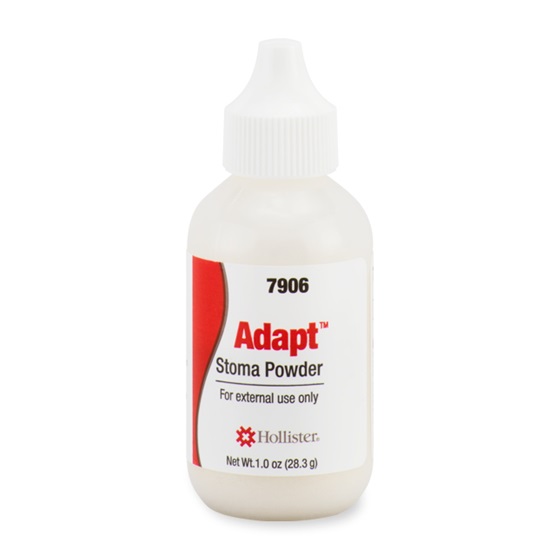
Stoma powder and its uses

Stoma powder is a non-drug powder that performs the role of absorbing moisture from the broken surface surrounding a stoma. Stoma powder is not comprised of the same components that make up baby powder and body talc and should therefore not be used interchangeably. One should apply Stoma powder around a stoma that arises from an ostomy surgical procedure. You can apply Stoma powder after either a urostomy, ileostomy, or a colostomy procedure.

When stoma powder absorbs the moisture, it aids the ostomy opening to heal, adapt better, and allow the skin surrounding the stoma to heal. The ostomy stoma powder is not designated as a skin protectant and therefore does not prevent irritation. It is only intended to absorb the moisture from the skin surface caused by the irritation. Stoma powder is also referred to as peristomal skin protection or also as stomahesive powder.

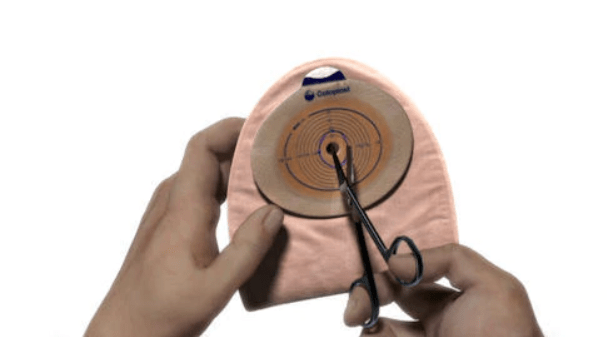
There are several causes for skin irritation around the stoma, and they include the following listed here. When stomal leakage or discharge contact the skin surface around the stoma area, irritation occurs. Another instance in which stoma skin area irritation occurs is when the ostomy baseplate is very big, very small, or is not the appropriate size for the ostomy opening. This instance results in stoma output leakages around the stoma area due to the appropriate space for the discharge being too small or too big. This leakage results in irritation around the stoma area as it comes into contact with the skin instead of getting into the stoma wafer that connects to an ostomy bag.

A flush stoma requires a convex ostomy system with wafers attached to the bag that contours inward toward the abdomen. Frequently removing an ostomy wafer could result in the tearing of the skin layer resulting in irritation. Frequent Changing of the pouch can also irritate.

The skin surface around the stoma should be as healthy as the skin from any other part of the body. Unhealthy and broken skin around the stoma area may cause the ostomy pouch not to attach as appropriately intended. Raw skin around the stoma area also causes pain and discomfort. When one experiences some skin irritation and any moist area around the stoma area, they should seek the help of a medical practitioner. Experiencing skin moistness and irritation is an indicator of ill health, and you should seek the help of a medical professional.

The following is a guide as to how one should use stoma powder. Wash with clean water and dry the skin surface surrounding the stoma thoroughly. Apply a small quantity of the stomahesive powder to the irritated skin area. You should only apply the powder should to moist skin only. Excess stoma powder should be brushed away gently with a soft piece of tissue. The applied powder sticks to the open moist skin. It would be best to sweep all the powder, not the loose skin avoid irritation and affect the ostomy system’s adhesiveness. When skin is fully healed, stoma powder application should stop.

Crusting is applying stoma powder and holding it in place using a skin prep. After applying the stomahesive following the above-stated procedure, it is sealed using a protective skin wipe by gently placing it on the area. It helps the stomahesive function better and does not irritate.

Surgical Treatment For Ulcerative Colitis

Although surgery can be the ultimate treatment for long-term ulcerative colitis, this option may not be for everyone. Your doctor will suggest an operation if your ulcerative colitis doesn’t respond to other conventional treatments, including medications and changes in your diet. Surgery can help prevent colon cancer.

When it comes to surgery to treat ulcerative colitis, there are two options that a doctor may consider. We will discuss both of them briefly in this article.

J-Pouch

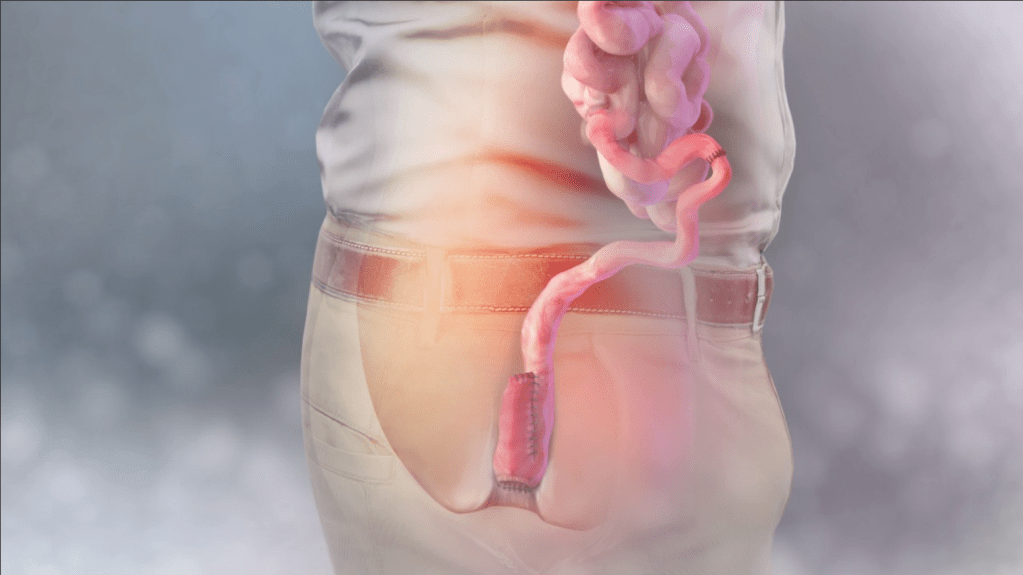
J-Pouch, also known as IPAA (ileal pouch-anal anastomosis), is a procedure aiming at removing the troubling part of your bowel, including your colon and rectum. The surgeon then folds the end of the small bowel to create a pouch of it and connects it to the anal canal. This internal pouch collects stools while the anus allows them to leave the body.

While a j-pouch can make your life easier, it can also have some side effects. For instance, it can become inflamed or irritated. This condition is known as pouchitis. Doctors recommend antibiotics for its treatment.

Since the muscles around your anus are not affected during the creation of a j-pouch, you will eventually be able to pass out stools from your anus the natural way.

Initially, your surgeon will give you an ileostomy to allow the j-pouch to recover. It means that you will have to attach an ostomy pouch over your stoma to take care of your bowel movements. It usually takes 12 weeks for your bowel to recover for you to be fit enough to undergo stoma reversal surgery. During this surgery, the surgeon will reconnect your bowel.

Your doctor will tell you any limitations you have to take care of during the recovery duration.

Ileostomy

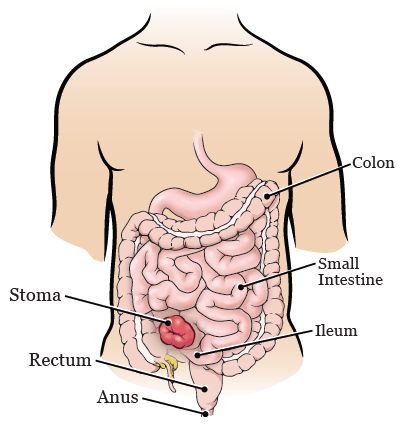
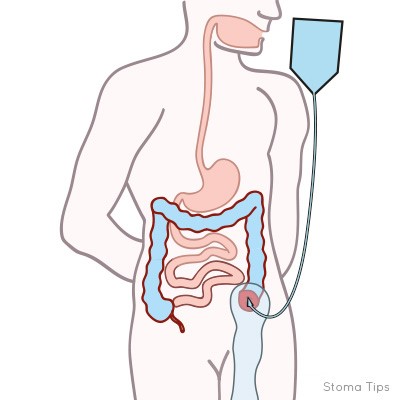
An ileostomy is a more conservative surgical option to treat ulcerative colitis. During this procedure, the surgeon will disconnect your colon from the small intestine and pull the end of the small intestine through a cut in the belly to create a stoma. After the procedure, you will no longer be able to pass out stools through your anus. Instead, they will leave your body through the stoma. You will have to wear an ostomy bag over the stoma to manage your stool evacuations. You will have to empty or change the bag once it is full.

An ileostomy can be permanent if your surgeon chooses to remove the colon and rectum permanently.

This bowel diversion can also have some side effects, including a heightened risk of infection. You can speak to your doctor or an ostomy care nurse to prevent or get rid of an infection on the stoma or the skin around it.

It will take some time for you to recover from the impact of ileostomy surgery. You can return to your routine activities in 6-8 weeks after surgery. You can eat whatever you want, engage in sports, and go to your workplace. You may, however, need to stay away from heavy lifting unless your doctor approves.

While living with an ileostomy is not hard, you will have to adapt to a careful lifestyle. It doesn’t necessarily mean an extra burden. Eventually, you will get used to this new routine.

Tips To Care For A Urostomy

You may have several questions regarding how to care for a urostomy. Because the requirements of every person may vary, there is no one right answer. You may, however, find a few suggestions and ideas helpful in this regard.

Emptying and changing the urostomy pouch

During your hospital stay after urostomy surgery, an ostomy care nurse will teach you how to empty and change your ostomy pouch. You will also learn about how to take care of the stoma and the skin around it.

Emptying the pouch

Emptying a urostomy pouch is very easy, thanks to a valve at the bottom of the pouch. With a higher chance of the growth of bacteria in the pouch, you will need to empty it more often. Allowing too much urine to store in the ostomy pouch can result in it gaining weight, which can cause the seal to compromise. You will need to empty the pouch when it is one-third to half full.

You may need to empty the pouch 5-6 times a day, which could mean emptying it every 4 hours. If you drink a lot of fluids, the frequency of emptying the pouch will be even higher.

Changing the pouch

When to change a urostomy pouch depends on the type of pouch you use and the state of your peristomal skin health. The best approach is to change the pouch according to a set schedule to prevent any problems. The best time to change the pouch is the morning before eating or drinking anything. If it is not possible due to any reason, you may want to change the pouch 1 or 2 hours after drinking fluids. You don’t want your stoma to pass out urine while you change the pouch.

You can change your pouch in any position you are comfortable in, such as sitting, standing, or lying. The rule of thumb is to get into the position that allows you to see your stoma when you change the pouch. Most people prefer changing their urostomy pouches while standing because it allows them to prevent any spillage of urine on the floor. You can also sit on the toilet and make sure that urine falls in the toilet bowl without coming in contact with the body and clothes.

The reason you need to set a proper schedule to empty and change the urostomy pouch is that it allows you to keep the pouch clean. A pouch with leftover urine can cause bacteria to travel up into the kidneys through ureters to cause kidney infections. Changing the pouch on a schedule will help prevent such infections.

Protect the skin around the stoma

The skin around your stoma should be just as the skin elsewhere on your abdomen. If any part of the skin comes in contact with urine regularly, it can develop irritation and other problems. It means that you are going to have to ensure a proper seal between the ostomy pouch’s skin barrier and the peristomal skin. For this purpose, you will need to change the ostomy pouch before it seal weakens. You will also need to use the right-sized ostomy pouch and skin barrier opening. For more information in this regard, you may want to meet or contact your ostomy care nurse.

Some Important Facts about Your Stoma

An ostomy surely tends to have an impact on your daily life but not when you are fully prepared for it. So your best shot at living a happy and healthy life even with your stoma is to know about it. This way, you will be able to adjust your routine right according to your requirements.

Important facts about stoma

As mentioned above, an ostomy changes things quite a bit in your life. The best way to control it effectively is to gain some knowledge about it. It is just a matter of accepting that you are going to have to live with something that has the tendency to affect your life. And then you have to be in a right state of mind to gain knowledge about it to manage it so that you could live an active and healthy life.

Signs of a healthy stoma

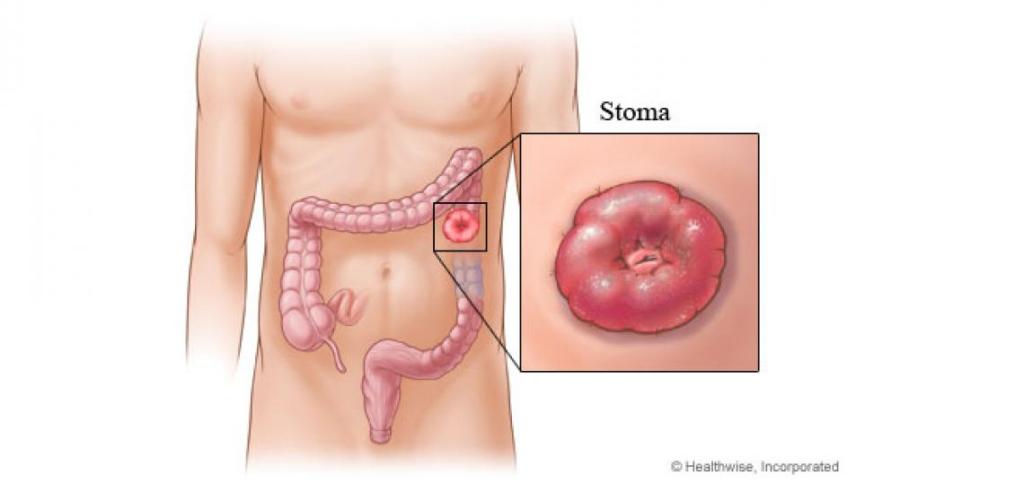
Right after the surgery, the stoma will be swollen. Its process of shrinking back to its permanent size may take a number of weeks or months. In this scenario, it is very important to know what a healthy stoma looks like. The signs of healthy stoma include:

  • Pink or red in color
  • Slightly moist
  • Not painful
  • Quick to bleed when rubbed or washed, but the bleeding should subside in a short amount of time

Other important facts

  • Stoma drainage: The stomal output should be emptied into the pouch. And you have to make sure that that it is not leaking under the skin barrier. In case you have a urostomy and the urine coming out of your stoma has blood in it, you need to contact your stoma care nurse.
  • Temporary stomas: Temporary stoma is a loop or double-barrel. This ostomy has a supporting device which is called rod or bridge. This stoma is removed after two weeks.
  • Peristomal skin: Peristomal skin is the skin around stoma. Remember, this skin should not have any rash, irritation or redness, and it should be a normal skin just like anywhere else on your body. This skin can be protected from irritation, which is caused by drainage, with the help of a properly fitting barrier. To keep this skin healthy, you are going to have to develop a habit of cleaning it while changing barrier. Be cautious about the redness, swelling, rash, or irritation on this part of the skin.
  • Types of pouching system: Remember, the type of pouch you need to use depends upon the type of surgery you had. There are different types of pouches from different manufacturers available for each kind of stoma.

Things to Consider About Colostomy Irrigation

If you have a sigmoid or descending colostomy, you can train your color to empty it at a regular time every day. This process is referred to as irrigating. Your doctor is the person to tell you if you are a good candidate for this process.

Close up portrait of senior man wearing cap looking away. Mature man with beard sitting in woods on a summer day.

What are the benefits of colostomy irrigation?

It’s mainly the matter of whether the colostomy irrigation is right for you. If it is, it is going to offer you several advantages.

  • You can wear a small stoma cap or a low profile small pouch.
  • You are not going to have to do frequent pouch changes.
  • You will have a sense of freedom.

How does the colostomy irrigation work?

The process of colostomy irrigation is done with the help of a tool which is pretty similar to enema. It is placed in the stoma. The first irrigation will be done by the healthcare team. Then you will be taught about how to do it at home. Now let’s talk about the process of colostomy irrigation.

  • You will have to allow one hour for the process of colostomy irrigation.
  • The special irrigation equipment will be used to place water into your stoma.
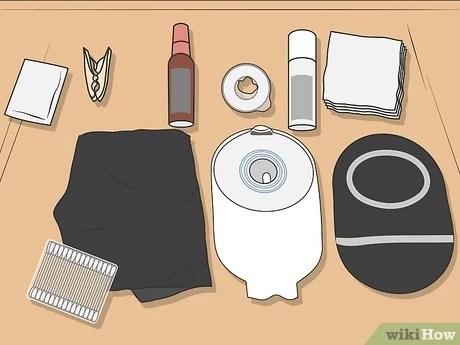
  • The equipment which is used during this process includes an irrigation bag, a sleeve, and a stoma cone.
  • After the irrigation is done, you can either use a stoma cap or attach a one or two-piece closed pouch to protect the stoma.

You will be able to determine the exact timing of stoma irrigation with the help of your ostomy care nurse. You may have to do this irrigation process on daily basis but it should be a problem once the process becomes a part of your daily routine.

Is colostomy irrigation right for you?

Yes, you are going to have to be eligible for colostomy irrigation because it is not appropriate for everyone. You will certainly not get a recommendation for this procedure if you have a urostomy or ileostomy. Even if you have a colostomy, you are going to have to talk to your health physician to discuss about whether or not you can do this procedure on daily basis. A few things that need to be considered in this regard are as under.

  • Remember, irrigation is a time commitment. It takes at least an hour.
  • You need to have irrigation equipment. And there is a fixed time slot that you have to get in order to perform this irrigation.
  • You are going to have to be persistent. It will take at least 8 weeks for your bowels to become properly regulated.
  • Last but not the least; you will have to be physically capable of doing this procedure without any help.

Again, you need to ask your doctor or nurse whether or not you are a good candidate for colostomy irrigation.

Better understand About Ostomy

Life is unpredictable to everyone, regardless of who they are, where they reside, and how they do. Often we have to choose among two critical choices, and unavoidable at times simply do not really. Within these instances, understanding all variations whenever tragedies occur is indeed the most incredible way to get out there and find happiness. It’s particularly significant if patients require the ostomy bag. Under this guardian article, we’ll go over all required to grasp regarding an ostomy.

What is the definition of an ostomy?

It is a surgically created hole that permits waste and urination to exit the body via the belly. Such surgery may require several causes, the most common of which is a bladder or digestion tract dysfunction. The placement of ostomies fluctuates, and they can be transitory or everlasting, depending upon that root issue and treatment. Ostomy procedures, for whatever rationale, protect people.

Although it may be hard to forecast the alterations that would occur due to ostomy operation, it is crucial to keep in mind because survival may not have been feasible without this. Ostomies mainly were required due to congenital abnormalities, malignancy, irritable bowel syndrome, cellulitis, leakage, and other factors. This surgical treatment is performed whenever necessary where at any stage, but it does not reduce the life span. It merely denotes the beginning of anything fresh.

Ostomies of Various Types

Regardless of the reason again for intervention, various forms of bowel obstructions are employed. The following are perhaps the most frequent ostomies done nowadays.

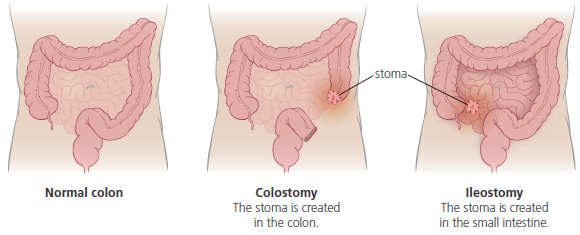
  • Colostomy

The majority of individuals probably encountered of either a colostomy—one it is indeed among the most common forms of ostomy operations. It happens when a section of an intestines or perhaps the rectum is eradicated .The remained of the intestine is extended towards the lower abdomen to guarantee ensure faeces exits your body securely. Interim colostomy procedure is required when regions of a anatomy require to recover and is readily reverted. Persistent colostomies typically executed whenever illness damages either termination of a lower uterine segment.

  • Urostomy

It is used if urine also requires to be forced apart out of a sick and faulty bladder. A piece of an intestinal wall or your beginning of the intestinal tract (cecum) is eliminated and repositioned such that urination travels straight from either the renal to your body. Approximately majority of urostomies are irreversible & culminate inside the entire eradication of a urethra.

  • Ileostomy

The ileum is a section of a small bowel, which is brought exterior of the abdominal muscles throughout this surgical procedure. Interim are ileostomies are typically performed if other parts organs system require the chance to recuperate and thus are ambiguous. Once the more considerable bowels should be eliminated, and restoration is impossible, irreversible ileostomies are conducted. It is a popular operation among Crohn’s patients.

  • J-Pouch

It’s a surgical intervention formed interior repository made from a patient’s small bowel. This changes the entire approach for the digestive system to act. Because of the complexity of such a procedure, it is performed in segments. Once the process is completed correctly, patients can use the restroom on their own even and without the need for surgical intervention.

What and how to Anticipate During Surgical Treatment

You will not be conscious during the procedure because ostomy procedures are administered underneath anesthesia. Based on the kind of ostomy patients require, the operation and medical treatment will change. It would need some time for organs to recover because this would be an extensive procedure that modifies where the gastrointestinal tract operates. Each of the daily routines, except elevated athletics, could be continued until you have recuperated. Like any surgery, then there is the possibility of consequences. Within a week of treatment, concentrate on the incision as well as the epidermis around it. Inform the surgeon whenever you see something unusual. Inform the specialist whether you have gastrointestinal troubles and the need to frequent the restroom.

With nothing but an Ostomy, you must learn to live with it.

Here are a couple of things to know if you’ve ever had an operation and now are dealing with such a persistent ostomy. To begin with, everybody who undergoes the procedure has the same psychological worries. It would be difficult, but because ostomies are existence operations, it is critical to keep the broader vision in mind. consciousness and body issues issues are by far the most common obstacles that most individuals circumvent. Individuals have a dread of extinction in the understanding that they will be abandoning their daily lives.

Tips for Adjusting to an Ostomy Bag 

Usually, with an ostomy, there are different products and ways to make it more tolerable. So here are some tips to helping to adjust to an ostomy bag. There are different kinds both physical and emotional adjustments, worth mentioning especially with an ostomy bag. 

Know it’s Normal 

During the recovery phase, it is normal to deal with many feelings, especially if you’ve dealt with a surgery which has changed you.That means you’re responsible not just for the stoma, but what happens to it, and also the changes you must do along with the skincare aspects. This can be quite stressful for some people, and you might experience grief, some anger, or even sadness. Know that it’s normal, because 1 in 500 people live with an ostomy, and by having the right support and supplies, you’ll be able to transition easily. 

Know when To Ask for Help 

It is normal to feel very down after getting an ostomy, and there can be feelings that stick around for a bit. There also might be signs of depression too, such as apathy, hopelessness feelings, anxious thoughts, thoughts of suicide, irritability, sleep problems, fatigue, or just a lot of sadness. If this is going on for a bit, you should reach out to get help, and know that there’s no shame in asking when you’re going through this. 

Find a Community 

If you’re looking to get help for your ostomy, sometimes talking to someone is a great first step. You can be supported and feel like you’re really you once again. Hearing from people who also have dealt with this also is good. You also might want to talk to a therapist or counselor if you’re struggling to find ways to cope healthily with the ostomy. 

Know the Stoma will Change 

At this point, you may wonder about your stoma. It does change in size and shape during the weeks after discharge. It will be swollen, but you can measure this every now and then to see how big or small it’s gotten.  If you notice that the swelling isn’t going down, or maybe it’s gotten very small in size, you might want to talk to your doctor abut this to see what the can offer to you. 

Learn how to Use Ostomy Bags 

Ostomy care is something new. Once you’re done with surgery, you should learn direct from the nurse or doctor how to use and also how to change the ostomy bag. It can be overwhelming to do it by yourself though, and if you have questions, you should always reach out to ensure that you get this on right. Learning how to change these bags does eventually help with improving your life, but it can be a bit cumbersome to change early on. 

Minimize Skin irritation 

This should be a given but try your best to ensure that you’re taking care of your skin as much as you can. Skin irritation is one of the more common things, and you may end up getting rashes and bumps, or even full-fledged wounds around the barrier. Usually, this is due to a reaction, too many adhesives, a buildup of seal adhesives, wrongful seal that’s creating leakages, and of course, badly-fitting appliances of skin barrier changes that are happening too much. Take some time to get familiar with your skin, and if you notice that there are changes, or maybe there is skin that’s red or weepy, you should talk to your doctor or nurse to see just how they can help you with this too. 

Researching for your Stoma

This day in age makes researching for things super easy.  We all have smartphones and the fastest internet available in the county and can learn about anything almost instantly.  It is a beautiful thing and it can really help your sanity when you hear bad news.  You can research quickly what you don’t know and in a way be relieved.  When you find out you are going into surgery you most likely got really nervous.  I know I sure did. All surgeries kinda scare me and bring out the worst in me. It is a normal feeling and most of us have it.  The thoughts of never being able to feel hot, or pretty also creep into your mind.  You think that sensual times will never be that way again.  These are the thoughts and feelings that happen when you are waiting on an ostomy surgery.  Learning about what you can and cannot do is easy now and for most people, they are relieved when they see their lives won’t truly change much, but these are the feelings and emotions that haunt your dreams when you get out of the surgery.  So who do you talk to to get over those feelings and fears? I want to go over my journey and who helped me. Because who you listen to and read from is important.

So take a breath and calm down because I am nothing special and the first thing I did was really simple. I talked with my doctor and nurse. My ostomy team was really nice, helpful, and encouraging.  It is simply stupid not to learn in person from people who do know what they are talking about.  This is the greatest wealth of knowledge for actual medical issues.  Use it and love it!  Ask all the questions you can and the hard ones too. I would have to say that I learned about all the sensual things from them and it was not awkward at all.  I think my nurse actually brought it up first.  It is part of life and really depending on where you are and who you are truly necessary.

But we all have a phone.  Another great area of information was simply from online sources.  There are a lot of major companies in the ostomy industry that is really worth checking out. These guys have a whole lot of starter information and lots of gear information.  I ended up calling up a few of these companies to get in-depth information, because well I didn’t know jack to start with.  They were really helpful and I spent an hour on the phone the frist call and ended up with some samples mailed to my home.  It was a great experience and they were focused on me and my lifestyle.  It was a reason I started to be more vocal about my ostomy and started to ask questions and talk to other areas as well. 

Now go local.  The next path was pharmacists and this was a tip from my online store friends.  They suggested I talk with local pharmacists who deal with this and buy gear specifically for what people like to buy.  That was a good idea and they helped me walk through the history of products.  They went through popular items and what people use for different reasons. Also, it was great to find a local place to buy from in case I needed an emergency item quickly! So take heart and ask questions always.