Monthly Archives: October 2021

The Complications That May Occur From IAR Surgery

Ileo-anal reservoir, or IAR, is a condition in which a part of the body leaks urine or excreta into the rectum. For individuals who have ileo-anal reservoirs or wish to learn more about the illness, there are numerous resources available, a list of websites, publications, and supportive services. An Ileo-anal reservoir (IAR) surgery has the potential to cause difficulties. Whether you have a problem depends on your wellness and dietary status before the procedure, as well as the medications you take. Short-term issues that arise quickly after surgery and long-term complications that occur months or years later are the two categories of complications that are specific to the IAR process. These issues should be discussed with your surgeon. Following an abdominal procedure, you may have the following complications:

  • blockage in the bowel that prevents fluids and solids from moving through
  • a pause in the resumption of regular bowel movements (paralytic ileus)
  • an infection of the wound and surrounding tissues, which can cause an infected area or a deeper accumulation of infectious fluid in the belly (abscess)

Occasionally, individuals with indeterminate colitis develop Crohn’s disease, which impacts the anus and other sections of the gastrointestinal tract, as well as their excretions. Diarrhea, cramping, swelling (pouchitis), and a tightening of the link between both the reservoir and the anus (stricture) are all symptoms of reservoir swelling, finding it difficult to clear the reservoir. Incontinence is induced by stool seeping out from the reservoir, which can happen day or night.

Pouchitis is a condition in which the reservoir (or pouch) becomes inflamed, resulting in diarrhea, cramps, and bloating. Only patients with the IAR for ulcerative colitis or indeterminate colitis are at risk for pouchitis. The link between both the reservoir and the anus is narrowed by a stricture. Stool leakage from the reservoir can happen uncontrollably. Incontinence may be exacerbated by certain pharmaceuticals, including sleeping pills.

Some people with the IAR may experience frequent loose stools (vastly higher than 8 per day). To manage the looser stools, eating adjustments can be made. If dietary adjustments cannot control diarrhea, you may also need to resort to medication. If you’ve been having trouble with loose stools, talk to an Enterostomal Therapy Nurse or surgeon about how to proceed. The chances of getting cancer in the reservoir or anus are quite slim. But, keep an eye on your reservoir and anus frequently to keep track of any abnormalities. Once a year, this should be done. Your physician will explain how often you should return for examinations.

Every abdominal incision has the potential to affect a woman’s fertility, because of the surgery itself or because of unforeseen complications. In the first trimester, some women might notice an increase in reservoir function as the uterus “goes head to head” for room in the pelvis. With a “regular” amount of feces, the reservoir might not fully grow, but this normally improves in between the second half of pregnancy. Your practitioner and obstetrician should examine and talk to you about the pros and cons between a vaginal delivery or a cesarean section.
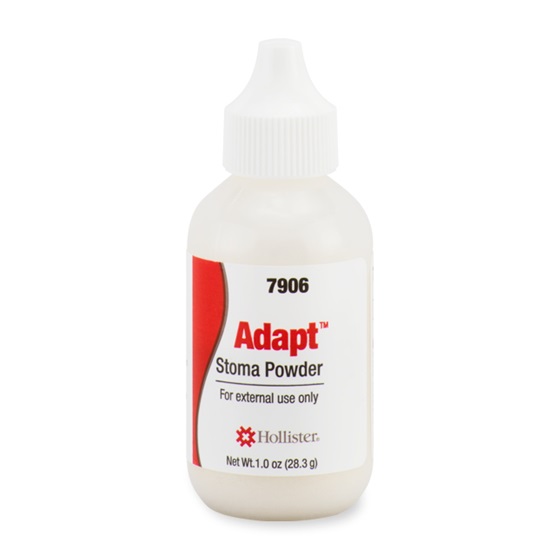
Stoma powder and its uses

Stoma powder is a non-drug powder that performs the role of absorbing moisture from the broken surface surrounding a stoma. Stoma powder is not comprised of the same components that make up baby powder and body talc and should therefore not be used interchangeably. One should apply Stoma powder around a stoma that arises from an ostomy surgical procedure. You can apply Stoma powder after either a urostomy, ileostomy, or a colostomy procedure.

When stoma powder absorbs the moisture, it aids the ostomy opening to heal, adapt better, and allow the skin surrounding the stoma to heal. The ostomy stoma powder is not designated as a skin protectant and therefore does not prevent irritation. It is only intended to absorb the moisture from the skin surface caused by the irritation. Stoma powder is also referred to as peristomal skin protection or also as stomahesive powder.

There are several causes for skin irritation around the stoma, and they include the following listed here. When stomal leakage or discharge contact the skin surface around the stoma area, irritation occurs. Another instance in which stoma skin area irritation occurs is when the ostomy baseplate is very big, very small, or is not the appropriate size for the ostomy opening. This instance results in stoma output leakages around the stoma area due to the appropriate space for the discharge being too small or too big. This leakage results in irritation around the stoma area as it comes into contact with the skin instead of getting into the stoma wafer that connects to an ostomy bag.

A flush stoma requires a convex ostomy system with wafers attached to the bag that contours inward toward the abdomen. Frequently removing an ostomy wafer could result in the tearing of the skin layer resulting in irritation. Frequent Changing of the pouch can also irritate.

The skin surface around the stoma should be as healthy as the skin from any other part of the body. Unhealthy and broken skin around the stoma area may cause the ostomy pouch not to attach as appropriately intended. Raw skin around the stoma area also causes pain and discomfort. When one experiences some skin irritation and any moist area around the stoma area, they should seek the help of a medical practitioner. Experiencing skin moistness and irritation is an indicator of ill health, and you should seek the help of a medical professional.

The following is a guide as to how one should use stoma powder. Wash with clean water and dry the skin surface surrounding the stoma thoroughly. Apply a small quantity of the stomahesive powder to the irritated skin area. You should only apply the powder should to moist skin only. Excess stoma powder should be brushed away gently with a soft piece of tissue. The applied powder sticks to the open moist skin. It would be best to sweep all the powder, not the loose skin avoid irritation and affect the ostomy system’s adhesiveness. When skin is fully healed, stoma powder application should stop.

Crusting is applying stoma powder and holding it in place using a skin prep. After applying the stomahesive following the above-stated procedure, it is sealed using a protective skin wipe by gently placing it on the area. It helps the stomahesive function better and does not irritate.